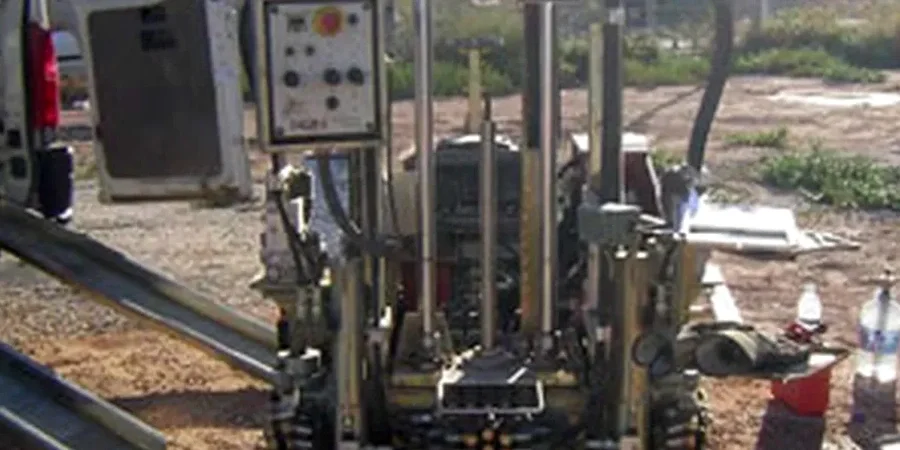
In Springfield, where shallow karst features and variable residuum over limestone bedrock dominate the subsurface, we see too many projects delayed because borehole data alone misses thin soft seams and dissolution cavities. That is why our team relies on the CPT (Cone Penetration Test) for continuous stratigraphic profiling. The cone picks up transitions that a split spoon sampler skips right past. We operate a 20-ton hydraulic CPT rig capable of pushing through the stiff residual clays common in the Springfield Plateau, and we log tip resistance, sleeve friction, and pore pressure simultaneously using a digital cone with a 15 cm² base area. For sites near the James River or Wilson’s Creek, where alluvial soils overlie weathered dolomite, we often pair CPT soundings with seismic refraction to map depth to competent rock where the cone meets refusal, giving the geotechnical engineer a complete picture without extra drilling.
Continuous CPT profiling catches thin soft layers and karst voids that interval sampling misses—critical in Springfield’s limestone plateau geology.
Our approach and scope
Local considerations
The main operational risk in Springfield is cone refusal on chert stringers and limestone pinnacles that are ubiquitous in the Burlington-Keokuk formation. When the cone hits a hard inclusion at shallow depth, the rod string can buckle if the operator does not back off immediately. Our rig uses a depth-encoded push system with automatic overload cutoff to prevent rod damage. Bentonite slurry is injected through the cone rods when we encounter a void larger than 12 inches, stabilizing the hole and preventing collapse that could trap the tool string. For sites in the Fassnight Creek floodplain or near old mine workings in north Springfield, we also monitor pore pressure dissipation tests at multiple depths to estimate the coefficient of consolidation, because those silty clays can hold excess pore pressure for weeks after loading and lead to delayed settlement if not accounted for in the foundation design.
Relevant standards
ASTM D5778 - Standard Test Method for Electronic Friction Cone and Piezocone Penetration Testing of Soils, ASTM D2487 - Standard Practice for Classification of Soils for Engineering Purposes (Unified Soil Classification System), IBC 2021 / ASCE 7-22 (Seismic Site Classification per Vs,30), AASHTO T 306 (when CPT is used for pavement subgrade characterization)
Complementary services
CPTu Piezocone Sounding
Standard cone penetration with pore pressure measurement at the u2 position. Includes corrected tip resistance (qt), friction ratio (Rf), and soil behavior type log per Robertson SBTn. We provide both digital data files and printed logs with depth-referenced groundwater readings.
Seismic CPT (SCPTu)
Downhole shear wave velocity profiling using a triaxial geophone module behind the cone. Vs measurements at 50 cm intervals, processed for Vs,30 calculation and IBC site class determination. Essential for seismic design in Springfield’s Site Class C and D soils.
Dissipation Testing
Pore pressure dissipation tests performed at predetermined depths to estimate the coefficient of consolidation (cv) in cohesive layers. We run staged holds until 50% excess pore pressure decay, useful for settlement rate predictions in soft alluvium along the Sac River corridor.
Typical parameters
Common questions
What depth can CPT reach in Springfield’s residual soils?
In the stiff residual clays and weathered limestone typical of the Springfield Plateau, our 20-ton rig routinely reaches 60 to 80 feet before encountering refusal on chert stringers or competent bedrock. Depth varies significantly by location—sites near the James River may hit gravel at 30 feet, while upland residuum can allow pushes beyond 100 feet.
How much does a CPT sounding cost in Springfield?
A standard CPTu sounding in the Springfield area typically ranges from US$190 to US$260 per location, depending on depth achieved, mobilization distance, and whether seismic or dissipation modules are added. We provide a fixed-price quote after reviewing the site address and projected depth requirements.
Can CPT detect sinkholes and karst features?
Yes, the continuous cone resistance profile is well suited for detecting karst features. A sudden loss of tip resistance combined with increased pore pressure often indicates a clay-filled cavity or soft infill zone. Combined with seismic refraction or electrical resistivity, CPT data helps map sinkhole extents and depths with greater confidence than standard borings alone.
Do you provide interpreted soil parameters or just raw data?
We deliver both. The field data includes corrected qt, fs, and u2 at 10 mm intervals. Our interpretation report adds SBTn soil classification, undrained shear strength (Su) via Nkt factor, constrained modulus (M) for settlement calculations, and equivalent SPT N60 values when requested for correlation with existing boring logs.
What is the difference between CPT and SPT for site investigation in Springfield?
CPT provides a continuous, high-resolution record of soil behavior without disturbing the sample, while SPT recovers a disturbed sample at 5-foot intervals. In Springfield’s interbedded residuum, CPT catches thin soft seams and voids that interval sampling misses. However, SPT is still useful for obtaining actual samples for laboratory classification, so many projects combine both methods for a complete geotechnical characterization.