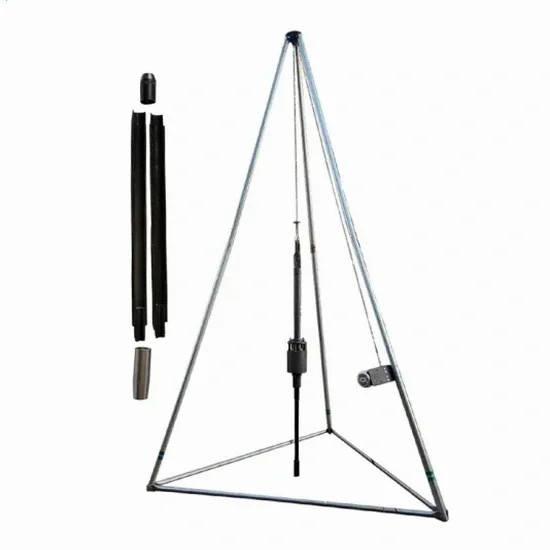
Springfield sits on the Springfield Plateau, where Mississippian limestone and chert underlie variable residuum—red clay, silt, and weathered rock. IBC Chapter 16 requires site-specific shear strength data for Seismic Design Category C, and ASTM D1586 governs the SPT procedure. The standard penetration test remains the most direct way to get N-values and disturbed samples in this karst-influenced profile. We run the split spoon sampler with a 140-lb hammer dropping 30 inches, counting blows per 6-inch increment. The refusal criterion at 50 blows in 6 inches signals rock or chert float, common across Greene County. Results feed bearing capacity calculations, settlement estimates, and liquefaction screening where the water table rises during wet springs. Complementing the SPT with CPT soundings can refine the stratigraphy when thin clay seams between limestone ledges need continuous profiling.
N-values from SPT in Springfield's residual clay define the difference between a spread footing and a drilled pier foundation.
Our approach and scope
Local considerations
Springfield's freeze-thaw cycles and spring rain can saturate the upper residuum, temporarily raising the groundwater into the zone where N-values were taken in dry conditions. An SPT log from August may not reflect the reduced effective stress of March. The karst risk is equally real: a boring that hits a void or solution-widened fracture gives zero recovery and hammer drop without resistance. When that occurs, the N-value is meaningless, and the log must flag the anomaly. On sites near the James River or Wilson's Creek, alluvial sands with N-values below 15 at depths less than 50 feet require a liquefaction assessment under ASCE 7-22. Skipping that step in Seismic Design Category C leaves the structural engineer without the Site Class F triggers or the Cyclic Resistance Ratio needed for foundation design.
Explanatory video
Relevant standards
ASTM D1586 - Standard Test Method for SPT and Split-Barrel Sampling of Soils, ASTM D2487 - Classification of Soils for Engineering Purposes (USCS), ASCE 7-22 - Minimum Design Loads (Seismic Site Class), IBC 2021 Chapter 16 - Site Classification procedure
Complementary services
SPT Boring and Field Logging
Hollow stem auger drilling with split spoon sampling at 5-foot intervals. Real-time blow count recording, sample description per ASTM D2487, and groundwater observation.
Liquefaction Screening
SPT-based liquefaction potential evaluation using Seed and Idriss simplified method. Cyclic Stress Ratio and Cyclic Resistance Ratio calculation for the design earthquake magnitude.
IBC Site Classification Report
Compilation of N-values and shear wave velocity estimates into a Site Class determination (C, D, or E) per IBC Chapter 16, signed and stamped for permit submission.
Typical parameters
Common questions
How deep do you typically drill SPT borings in Springfield?
Most commercial projects require 30 to 50 feet. We stop at refusal—usually 15 to 25 feet on the Springfield Plateau where the Mississippian limestone cap is intact. For sites in the James River alluvium, borings often extend to 50 feet to reach competent rock.
What does an SPT test cost in Springfield MO?
A standard SPT boring with sampling at 5-foot intervals to 30 feet depth runs between US$590 and US$660 per boring. Deeper borings, difficult access, or traffic control on commercial corridors add mobilization costs.
Can SPT data be used for liquefaction analysis in Greene County?
Yes. We apply the Seed and Idriss simplified procedure using corrected N1,60 values. The alluvial sands near Wilson's Creek and the James River are the primary zones where liquefaction screening is required under ASCE 7-22 for Seismic Design Category C.
How soon do we receive the SPT logs after drilling?
Field logs are available same day. The final signed report with USCS classification, groundwater data, and IBC Site Class determination is delivered within 3 to 5 business days.