A commercial lot off East Chestnut Expressway sat vacant for two years. The owner poured money into asphalt twice. It cracked both times. Problem wasn't the mix. It was the subgrade. Springfield sits on karst topography with residual clay pockets that swell with moisture and shrink in dry summers. A standard pavement section fails fast here. That project needed a flexible pavement design tied to real geotechnical data—not a generic cross-section. We pulled Shelby tubes from the upper 5 feet. Ran Atterberg limits to quantify the clay's shrink-swell potential. Then we modeled the pavement structure using AASHTO 93 methods. The new design added a geotextile separator and a thicker aggregate base. Three years later. Zero cracks. That's the difference between paving and engineering. For any Springfield project over 200 daily ESALs, we recommend subgrade evaluation before a single ton of asphalt leaves the plant.
Good pavement design starts 3 feet below the asphalt. In Springfield, that means dealing with karst clay and freeze-thaw cycles before you ever lay a binder course.
Our approach and scope
Local considerations
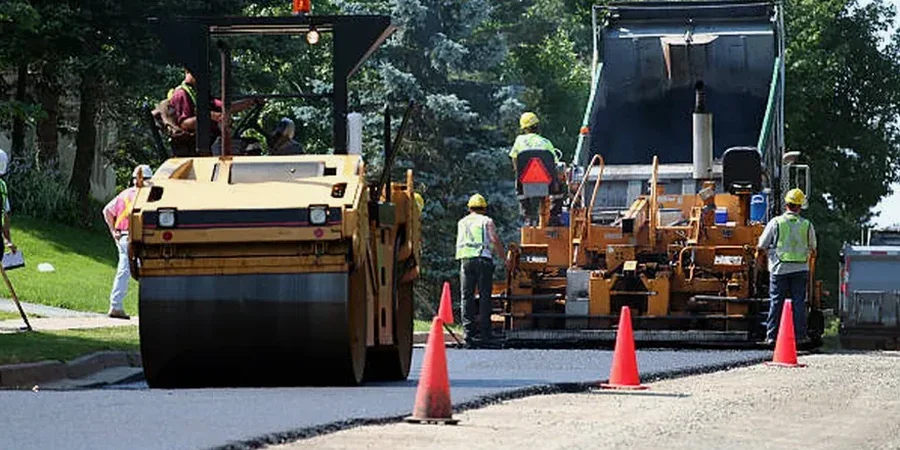
A nuclear density gauge rolls across fresh asphalt on a Springfield arterial at 7 AM. The technician calls out numbers. 92.3% compaction. The spec requires 92%. It passes. But nobody checked the underlying base course density three days earlier. That's where the risk hides. We use a sand cone apparatus on the aggregate base before paving begins. The steel base plate sits flat on compacted Type 5. The cone valve opens. Dry sand flows into the hole. We weigh the sand, calculate the volume, and get the in-place density. If it's below 95% of modified Proctor, the asphalt crew doesn't mobilize. Period. A soft base deflects under traffic loads. The asphalt layer flexes beyond its fatigue limit. Cracks initiate from the bottom up. Within three years, you have alligator cracking and a failed pavement section. We also verify base thickness with probe rods at random stations. Cores don't lie. Neither do premature potholes. The sand cone density test is cheap insurance against a six-figure pavement failure. Every project in Springfield with more than 50 truck trips per day gets this check.
Explanatory video
Relevant standards
ASTM D1559 (Marshall mix design), ASTM D1883 (CBR for subgrade and base), AASHTO R 50 (geotextile installation)
Complementary services
Pavement Structural Design
Layer thickness calculations using traffic ESALs, subgrade resilient modulus, and material properties. We deliver cross-sections ready for bidding.
Subgrade Stabilization Plans
Lime or cement treatment specifications for expansive Springfield clays. Includes dosage rates, mixing depth, and compaction requirements.
Construction QA Testing
Nuclear density, sand cone, and coring during paving. We verify compaction, thickness, and mix properties against the approved design.
Typical parameters
Common questions
What's the typical cost for flexible pavement design on a commercial parking lot in Springfield?
For a standard commercial lot design with subgrade evaluation, traffic analysis, and pavement section calculations, fees typically range from US$1,790 to US$4,760. The final number depends on lot size, required core samples, and whether stabilization design is needed. We provide a fixed proposal after reviewing your site plan and soil report.
How does Springfield's clay subgrade affect asphalt pavement life?
The residual clay from weathered limestone loses strength when wet and swells during seasonal moisture changes. Without stabilization, it can lose over 50% of its bearing capacity during spring rains. This leads to rutting and fatigue cracking. We address this by specifying lime treatment or increasing base thickness based on CBR values measured on-site.
What traffic data do you need for the design?
We need average daily traffic (ADT) and truck percentage. If available, axle load spectra from weigh-in-motion data are ideal. For smaller projects, we estimate ESALs from vehicle classification counts. The design thickness depends directly on this traffic input—higher ESAL counts require thicker asphalt and base layers.
Do you provide mix design for the asphalt itself?
Yes. We specify Marshall or Superpave mix designs per ASTM D1559 or AASHTO M 323. The mix targets depend on the layer: surface courses use smaller aggregate and higher binder content for durability; binder courses use larger aggregate for strength. We work with local Springfield plants to match available aggregate sources.